Brand Concierge
Role
Product Designer
Collaborators
PM, Engineering, Product
Timeline
2 Months
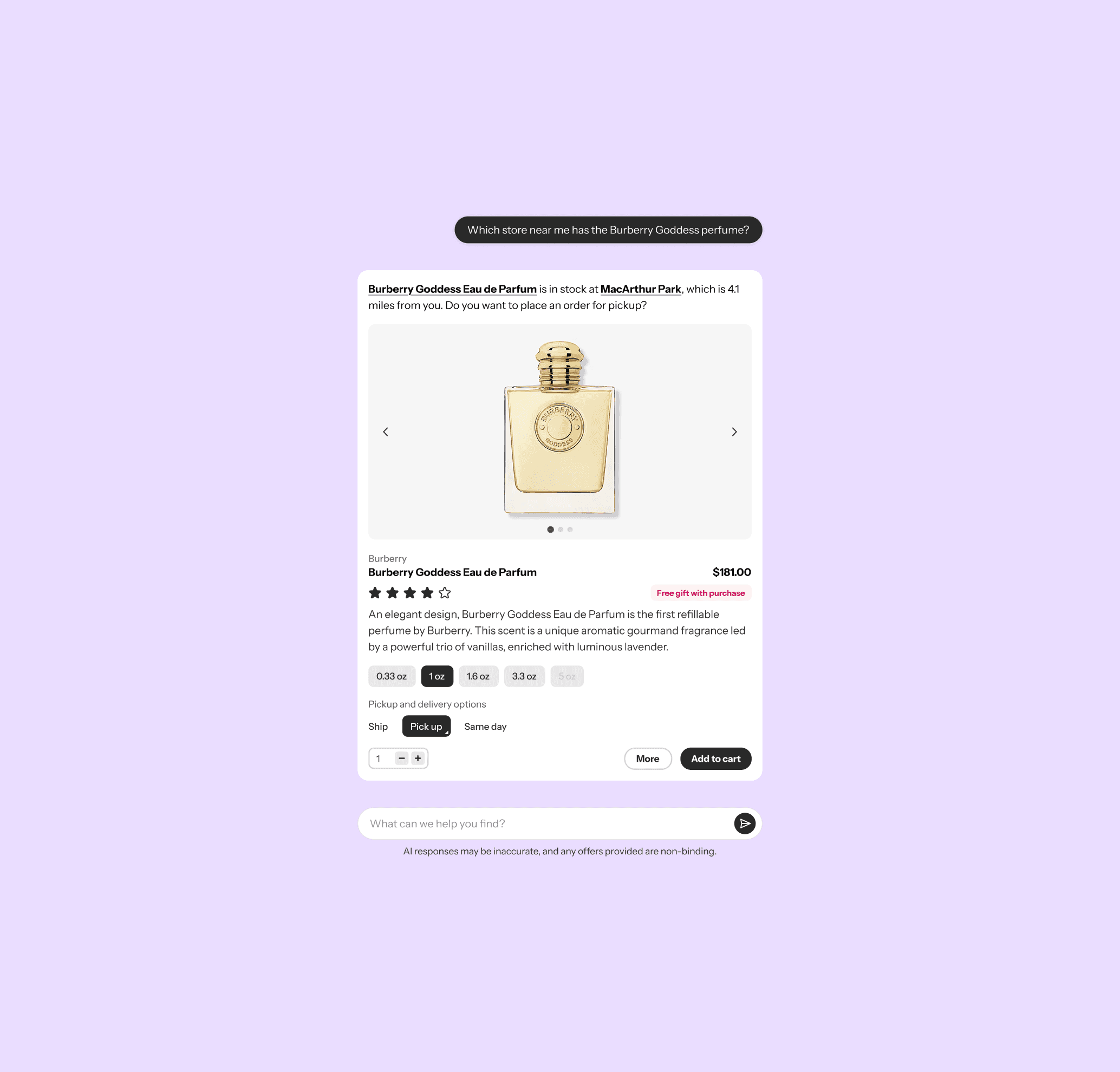
Turning a white-glove experience into a self-service agentic platform.
Brand Concierge is Adobe's enterprise AI agent platform that enables brand managers to configure and deploy on customer-facing agents. My work directly shaped how the product scaled beyond its MVP.
Role
Product Designer on a product team with engineering and PM, working on a two-month timeline. I worked on two of Adobe's first four enterprise clients, restyling components and configuring agent behavior to align with each client's brand guidelines. Simultaneously, I owned the design of the next-phase configurability framework, from exploration through prototype delivery to engineering handoff.
Problem
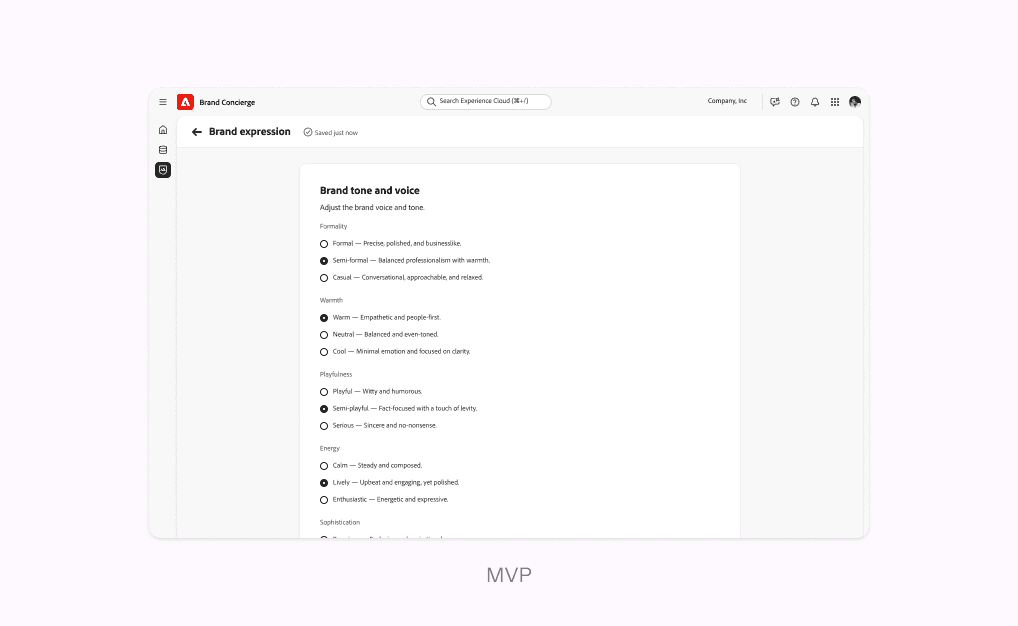
The MVP of Brand Concierge required a white-glove approach. Brand managers, the target user, could only interact with the product through a basic form. Everything that actually shaped the agent's behavior and visual output had to be done on the backend by a developer. Sales representatives served as liaisons between clients and the product team. While this approach worked in the short term, it couldn't scale. My role was to ship end-to-end experiences in the existing working model while also designing the next phase of the configuration process.
Research
An Adobe Research study found that 40% of Business Professionals were interested in an Adobe AI tool that would help them successfully complete tasks “without having advanced technical skills.” User research conducted during the MVP phase also surfaced a clear gap in the configuration experience. Brand managers couldn't tell how their form inputs would affect the agent's visual output. That finding, along with the user need for a non-technical solution, drove the addition of a preview panel alongside the configuration options. One study participant said,
“It would be easier to choose brand expression options if a preview was available.”
Process
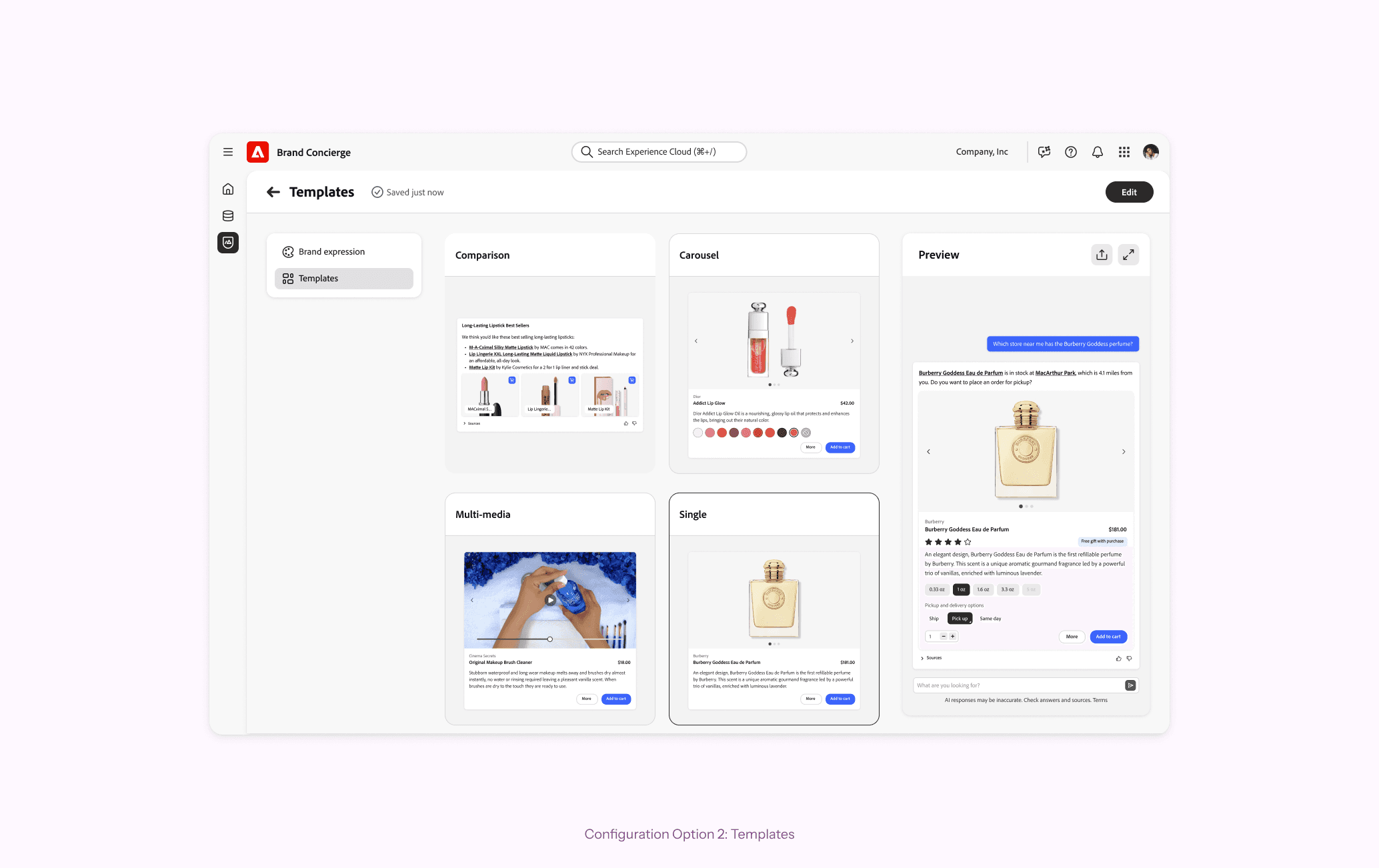
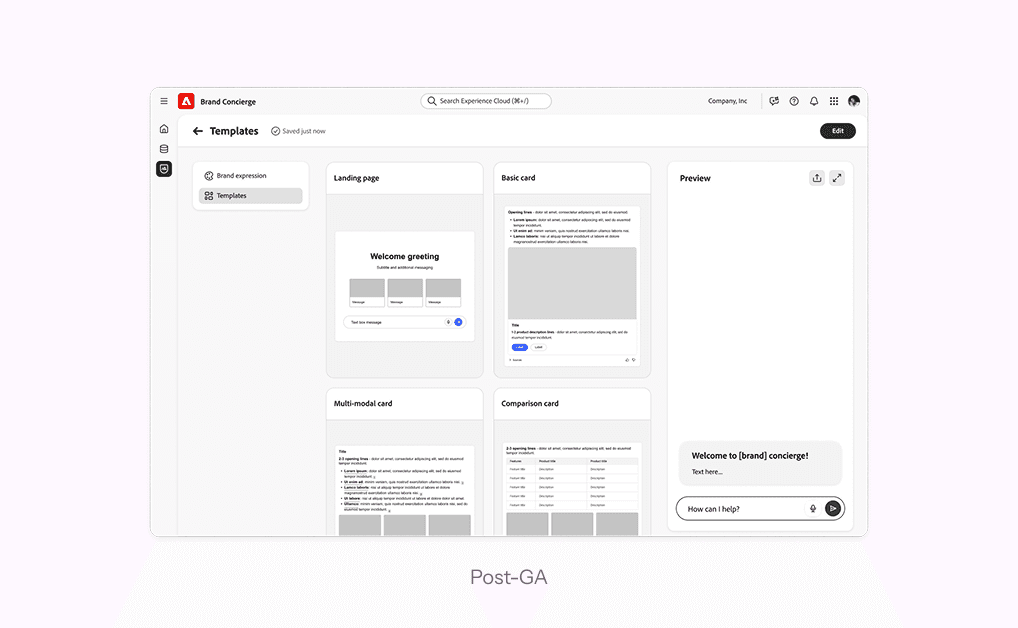
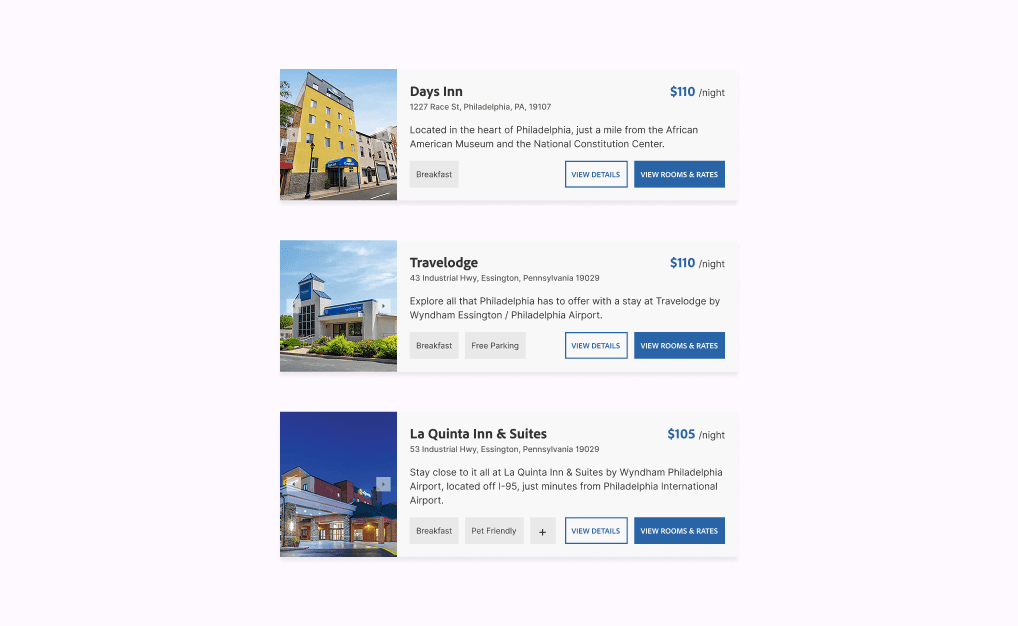
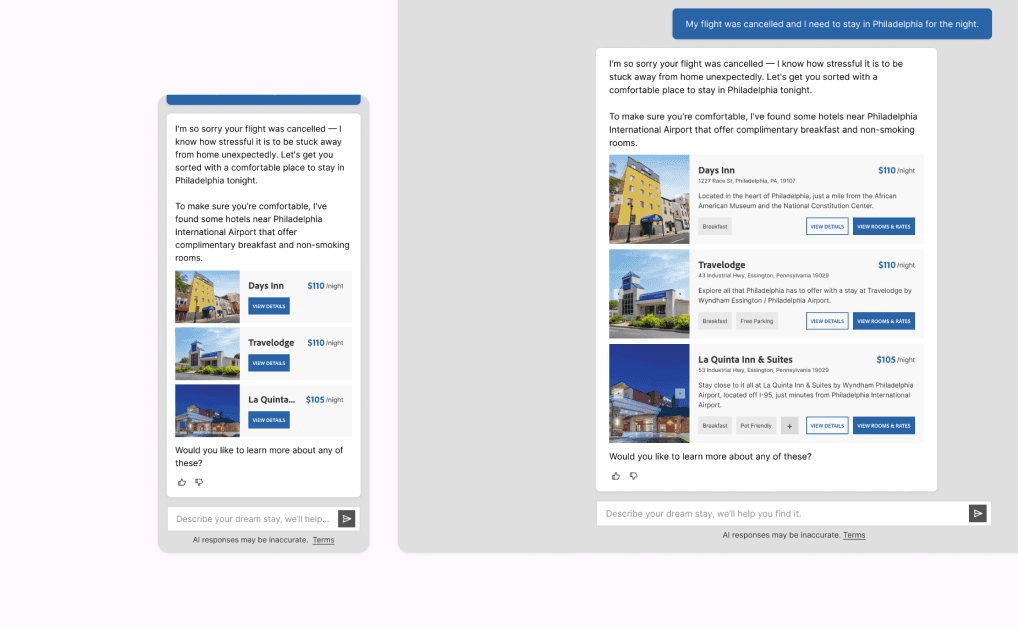
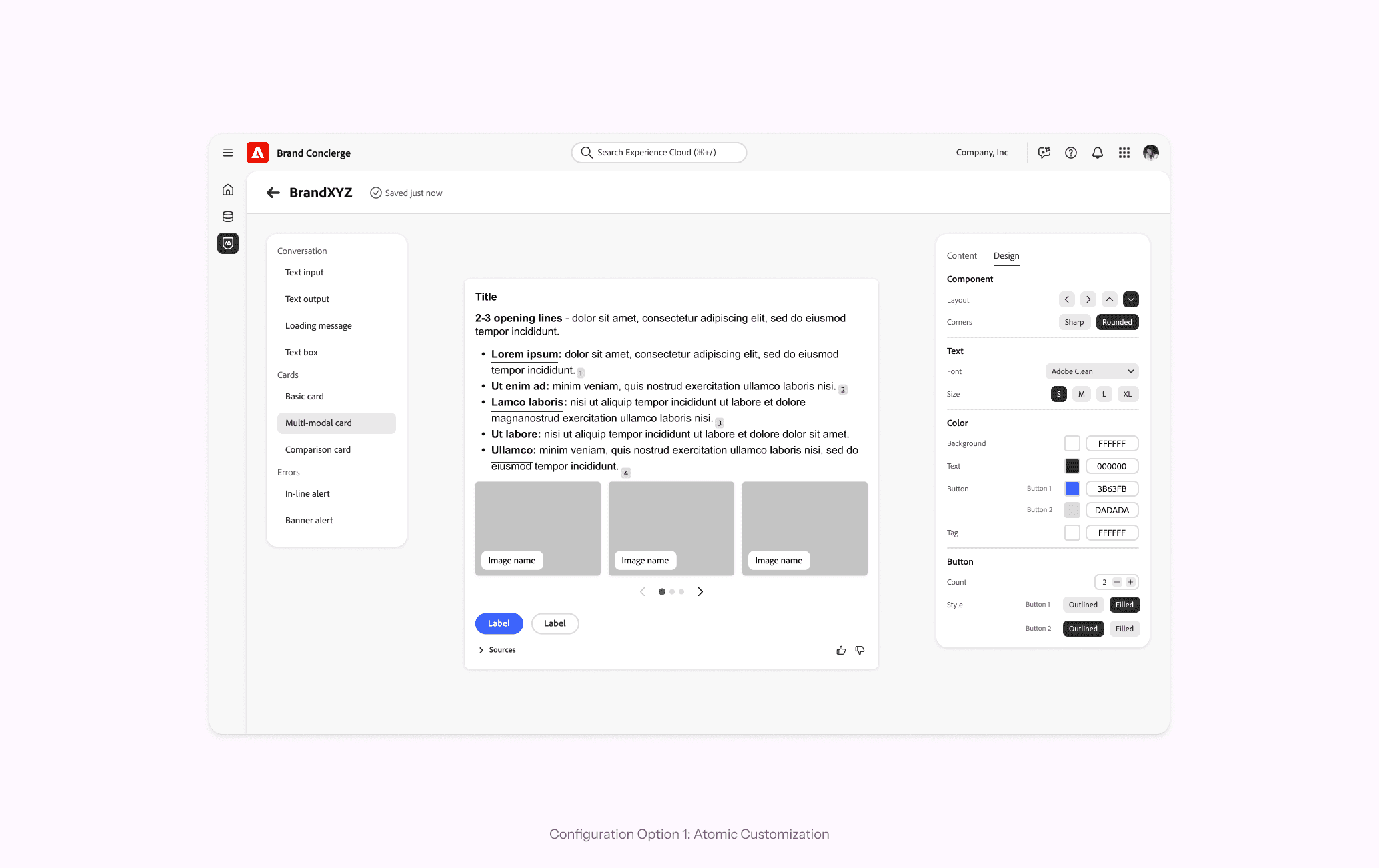
For white-glove engagements, I shipped UI components to align with each client's brand guidelines, and packaged the work as end-to-end prototypes and screens. A sales partner then shared the work with the client, collected feedback, and brought it back to design for iteration. In parallel, I explored what a self-service configuration experience could look like. The first direction was atomic-level customization, giving brand managers granular control over things like spacing and font size. That approach placed too much cognitive load on non-technical users and quickly felt like a developer tool. After several rounds of exploration and internal critique, I moved to a template-first model. Brand managers upload their brand guidelines and select from a set of pre-composed templates. The UI patterns are automatically styled according to their guidelines. That decision was validated through rapid prototyping in Cursor.
Outcomes
I shipped two end-to-end experiences for Brand Concierge pilot clients. Interactive prototypes and static screens were used directly in sales conversations to close these deals. Designs were successfully handed off to engineering for implementation. Additionally, the new configurability framework was added to the post-GA roadmap. The approach was set to be validated through user testing before rollout. Across all work streams, prototypes enabled me to quickly explore and align with stakeholders on solutions. I was also able to share my experience working with Cursor with the internal design team and help them ramp up to using it in their own work.
Retrospective
The hardest part of the configurability work was holding two timelines in the same frame: a north star of the future and what it could realistically ship next. The atomic customization direction was too complex and future-facing. The template-first pivot worked because it was evaluated against two constraints simultaneously: did it serve user needs, and could engineering actually build it?